Perceptions of producers in the southwest of Buenos Aires around the cultivation of safflower
DOI:
https://doi.org/10.19137/semiarida.2026(1).81-90Keywords:
alternative crops, safflower, Sudoeste Bonaerense, oil industryAbstract
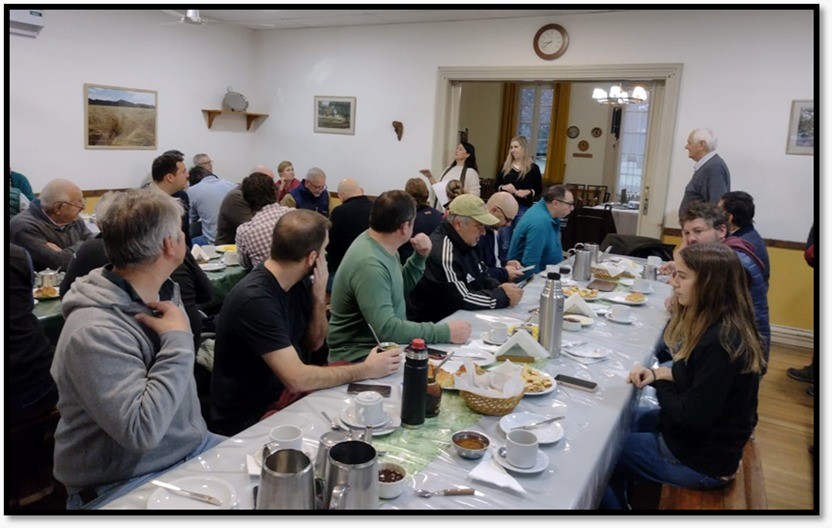
The South West of Buenos Aires (SWBA) region has climatic and soil variability that differentiates it from the rest of the province of Buenos Aires. The SWBA is part of the semi-arid, arid, and sub-humid-dry region of the country and differs from the rest of the province in terms of its primary productive potential and limitations. Wheat production is the most important activity in the area. It is a winter crop deeply rooted among producers from a cultural perspective (on the supply side) and due to consumption habits (on the demand side). Depending on market prices and weather conditions, it usually yields low profitability. Drought is one of the factors that has been affecting productivity. The objective of this study is, first, to investigate producers' perceptions regarding safflower cultivation. For this, a workshop is held, a tool framed within the Participatory Rural Diagnosis (PRD) methodology. Safflower, due to its characteristics in terms of soil requirements, growing season, among others, competes with wheat. Furthermore, it is drought-resistant and has flour and oilseed properties. According to recent agronomic studies, it can adapt very well to the agroecological conditions of the SWBA, allowing the diversification of the regional production matrix. Secondly, the aim is to explore the crop's potential for incorporation into the oil industry. In this case, an interview is carried out with a key representative of the region.
Downloads
References
Bolsa de Comercio de Rosario. (2022). Informativo Semanal. Año XL - Edición N° 2071 - Especial Agroindustria – 06/10/22. https://www.bcr.com.ar/es/mercados/investigacion-y-desarrollo/informativo-semanal/noticias-informativo- semanal/las-fabricas-0
CIARA. (2023). Producción aceites vegetales por provincias (actualizado 3/2/23). https://www.ciaracec.com.ar/
Comisión Económica para América Latina y el Caribe (CEPAL). (2021). Perspectivas del comercio internacional de América Latina y el Caribe, 2020 (LC/PUB.2020/21-P).
Dellepiane, A., Sánchez Vallduví, G., & Chamorro, A. (2023). Importancia económica, usos y propiedades de lino, colza y cártamo. https://sedici.unlp.edu.ar/handle/10915/158499
Geilfus, F. (2008). 80 tools for participatory development: Appraisal, planning, follow-up and evaluation. IICA.
Guzmán, G. I., López, D., Román, L., & Alonso, A. M. (2013). Investigación acción participativa en agroecología: Construyendo el sistema agroalimentario ecológico en España. Agroecología, 8(2), 89–100. https://revistas.um.es/agroecologia/article/view/212231
Ley 13.647 de 2007. Plan de Desarrollo del Sudoeste Bonaerense. Boletín oficial. 3 de abril de 2007.
Ministerio de Relaciones Exteriores, Comercio Internacional y Culto. (2025). Oportunidades comerciales. https://www.cancilleria.gob.ar/es/argentinatradenet/oportunidades-de-negocios/oportunidades-comerciales
Pontificia Universidad Javeriana. (s.f.). Guía metodológica para la caracterización participativa de sistemas agroalimentarios y percepción de estrategias de mitigación al cambio climático. Facultad de Estudios Ambientales y Rurales.
Salas, M. (1997). Enfoques participativos para el desarrollo rural. En Enfoques participativos para el desarrollo rural. Ediciones CAAP (Centro de Ayuda Académica Profesional), Quito.
Sánchez-Parga, J., Salas, M., Rengifo, G., Brenes, C., Machaca, M., Tobar, G. y Izko, X. (1997). Enfoques participativos para el desarrollo rural. Ediciones CAAP (Centro de Ayuda Académica Profesional), Quito.
Sánchez Vallduví, G. y Chamorro, A. (2023). Lino, colza y cártamo: Oleaginosas que aportan a la diversificación productiva. https://sedici.unlp.edu.ar/handle/10915/153903
Schonhuth, M. y Kievelitz, U. (1994). Diagnóstico rural, diagnóstico rural participativo: Métodos participativos de diagnóstico y planificación en la cooperación al desarrollo. Una introducción comentada. Editorial GTZ (Deutsche Gesellschaft für Technische Zusammenarbeit), Alemania.
Zurro, T., Treboux, J. y Bergero, P. (2022). Los beneficios de diversificar demanda: Una industria aceitera argentina con perfil exportador. Revista de la Bolsa de Comercio de Rosario, Año XXXIV(2043). https://www.bcr.com.ar/es/mercados/investigacion-y-desarrollo/informativo-semanal/noticias-informativo-semanal/los-beneficios
Downloads
Published
Issue
Section
License
La Editorial de la Universidad Nacional de La Pampa (EdUNLPam) exigirá a los/as autores/as la firma del siguiente documento:
La EdUNLPam lleva a cabo la publicación del artículo: (Título del Artículo) en SEMIÁRIDA Rev.Fac.Agron UNLPam ISSN 2362-4337 (impresa) ISSN 2408-4077 (en línea), del cual el/los abajo firmantes son autores de una o más partes. En el mismo acto, el/los autores entregan exclusivamente a la EdUNLPam todos sus derechos protegidos por las leyes de propiedad intelectual que rigen en la Argentina para reproducir, publicar, editar, fijar, comunicar y transmitir públicamente en cualquier formato o medio impreso o electrónico, inclusive internet, el artículo enviado a publicación e incluirlo en índices o bases de datos nacionales e internacionales. A cambio, la EdUNLPam entrega a los autores la autorización para la publicación o reimpresión con ines académicos y educativos en cualquier libro o medio de divulgación, con la sola obligación de citar el artículo original publicado en la EdUNLPam. Cada autor acuerda en que el material provisto a la EdUNLPam es un trabajo original, que no ha sido impreso o publicado en cualquier otro medio con anterioridad y que no vulnera derechos de terceros. El Primer autor tendrá la posibilidad de leer y corregir el artículo ya editado como “prueba de galera”, pero si el autor no devolviera esas correcciones de la prueba de galera dentro del tiempo especificado, el proceso de producción y publicación podrá proseguir sin la aprobación del autor. El/los autor/es no recibirán compensación monetaria de la EdUNLPam por el uso del material contenido en este artículo y asumen la responsabilidad de las opiniones vertidas en él.






.png)



22.png)


.jpg)




.jpg)