Study and monitoring of the anaerobic digestion process in batch regime of Arundo donax L., including scale-up evaluation
DOI:
https://doi.org/10.19137/semiarida.2025(Supl.).51-63Keywords:
Biomethane Potential, Lab-scale Reactor, Giant ReedAbstract
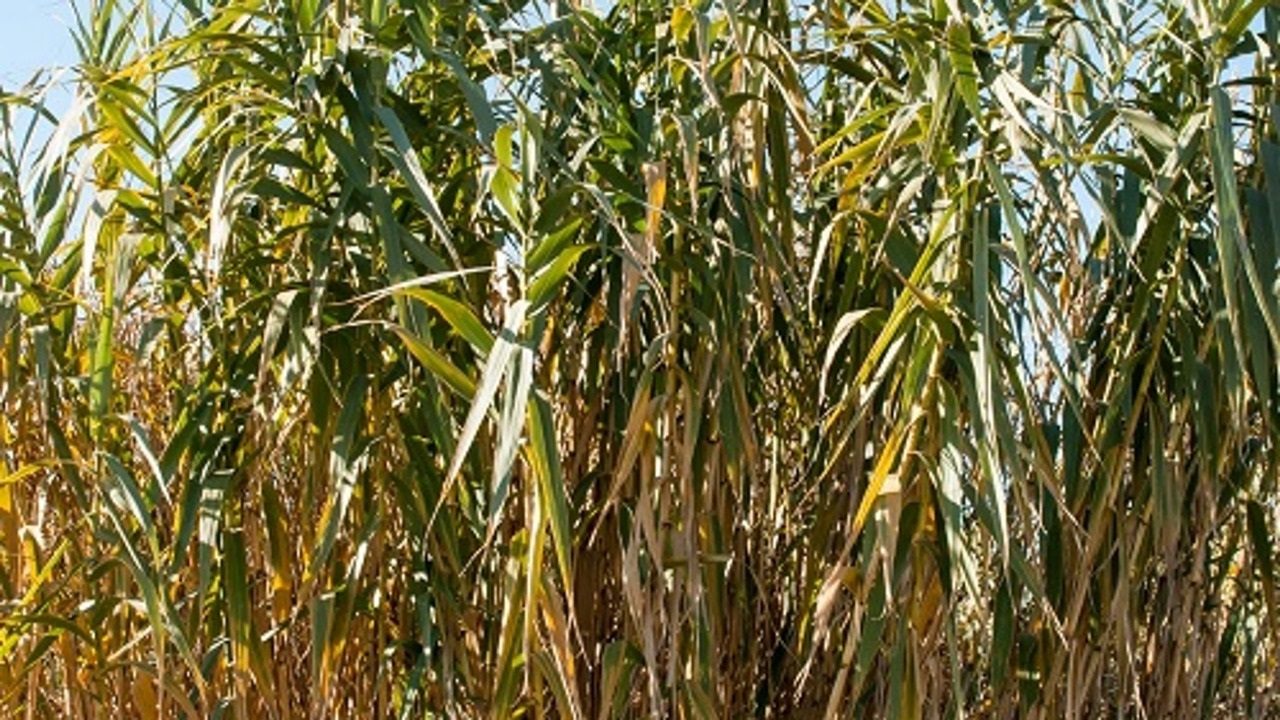
The utilization of perennial energy crops such as Arundo donax L., with high productivity and low input requirements, has attracted interest as a sustainable alternative for bioenergy generation. In this context, the treatment of biomass through anaerobic digestion has increased, driven by the assessment of the main benefits associated with this technology as an effective strategy for converting organic matter into energy in the form of biogas. This study evaluated the anaerobic digestion of Arundo donax L. in a temperature-controlled batch reactor with a working volume of 7 L, operated under mesophilic conditions and using sludge from a wastewater treatment plant as inoculum. The process was assessed by monitoring physicochemical parameters in the reactor and quantifying biomethane production. In parallel, a standardized assay was performed to determine the Biomethane Potential (BMP) of the biomass. The results showed a BMP of 220.07 ± 2.7 mL CH₄ g VS-1, while the specific biomethane production in the batch reactor reached 131.60 mL CH₄ g VS-1, representing a 40 % reduction attributable to process scaling. This discrepancy may be associated with factors such as mixing efficiency, mass transfer limitations, or the actual biodegradability of the biomass under operational conditions. The monitored physicochemical parameters confirmed the stability of the process, indicating that the system operated under controlled conditions without signs of inhibition.
Downloads
References
American Public Health Association (APHA). (1999). Standard methods for the examination of water and wastewater (20th ed.).
American Society for Testing and Materials (ASTM). (1999). Annual book of ASTM standards. ASTM Bulletin.
Aquino, S., Chernicharo, C., Foresti, E., Dos Santos, M., y Monteggia, L. (2007). Metodologias para determinação da atividade metanogênica específica (AME) em lodos anaeróbios. Revista Engenharia Sanitária e Ambiental, 12, 192–201.
Baldini, M., da Borso, F., Ferfuia, C., Zuliani, F., y Danuso, F. (2017). Ensilage suitability and bio-methane yield of Arundo donax and Miscanthus × giganteus. Industrial Crops and Products, 95, 264–275. https://doi.org/10.1016/j.indcrop.2016.10.031
Belmonte, L., Mariotta, A., Binotto, N., Quicchi, A., y Bernard, M. (2023). Comparative analysis of lignocellulosic energy crops with high energetic potential: Arundo donax L. and Sorghum saccharatum. https://doi.org/10.33414/ajea.1301.2023
Chen, Y., Zhao, Z., Zou, H., Yang, H., Sun, T., Li, M., ... y Gu, L. (2019). Digestive performance of sludge with different crop straws in mesophilic anaerobic digestion. Bioresource technology, 289, 121595.
Cardoso, R., Manzur, A., Santalla, E., Lazaro, L. y Córdoba, V. (2023). Producción de bioenergía a partir de Arundo donax L., un cultivo perenne de alto potencial energético en Argentina. ENERLAC. Revista De energía De Latinoamérica Y El Caribe, 7(1).
Córdoba, V., Fernández, M. y Santalla, E. (2014). Influencia del inóculo en la digestión anaeróbica de purín de cerdo. Energías Renovables y Medio Ambiente, 34, 29-37.
Córdoba, V., Ibarlucía, D., y Santalla, E. (2022). Desarrollo y validación de un mecanismo para remover CO₂ y cuantificar la producción de CH₄ en sistemas de digestión anaeróbica. RedBioLAC, 6(1),40-45.
Corno, L., Pilu, R., Cantaluppi, E., & Adani, F. (2016b). Giant cane (Arundo donax L.) for biogas production: The effect of two ensilage methods on biomass characteristics and biogas potential. Biomass and Bioenergy, 93, 131-136. https://doi.org/10.1016/j.biombioe.2016.07.017
Craggs, L. y Gilbert, P. (2018). Reducción sostenible de gases de efecto invernadero en sistemas bioenergéticos: cambio climático: un factor impulsor y limitante para la bioenergía. En Balances de gases de efecto invernadero en sistemas bioenergéticos (pp. 1-10). Academic Press. https://doi.org/10.1016/B978-0-08-101036-5.00001-X
Enrique, C., y Monroy, C. (2024). Crecimiento económico ¿amenaza de la supervivencia? https://www.eesi.org/topics/fossil-fuels/description
Gerardi, M. H. (2003). The microbiology of anaerobic digesters. John Wiley & Sons.
González Suárez, A., Hernández Alfonso, G. y Pereda Reyes, I. (2019). Pretratamiento alcalino de bagazo de caña para mejorar la producción de biometano. Centro Azúcar, 46(4), 79–88.
Holliger, C., Alves, M., Andrade, D., Angelidaki, I., Astals, S., Baier, U., ... y Wierinck, I. (2016). Towards a standardization of biomethane potential tests. Water Science and Technology, 74(11), 2515-2522. https://doi.org/10.2166/wst.2016.336
Holliger C., Fruteau de Laclos H., & Hack G. (2017). Methane production of full-scale anaerobic digestion plants calculated from substrate’s biomethane potentials compares well with the one measured on-site. Frontiers in Energy Research, 5(2017),12. https://doi.org/10.3389/fenrg.2017.00012
Jankowski, K. J., Dubis, B., Sokólski, M. M., Załuski, D., Bórawski, P., & Szempliński, W. (2020). Productivity and energy balance of maize and sorghum grown for biogas in a large-area farm in Poland: An 11-year field experiment. Industrial Crops and Products, 148, 112326. https://doi.org/10.1016/j.indcrop.2020.112326
Jenkins, SR, Morgan, JM y Sawyer, CL (1983). Medición de la digestión y el crecimiento de lodos anaeróbicos mediante una titulación alcalinmétrica simple. Revista (Federación de Control de la Contaminación del Agua), 448-453.
Krause, M. J., Chickering, G. W., Townsend, T. G., y Reinhart, D. R. (2016). Critical review of the methane generation potential of municipal solid waste. Critical Reviews in Environmental Science and Technology, 46(13), 1117–1182. https://doi.org/10.1080/10643389.2016.1204812
Kreuger, E., Prade, T., Escobar, F., Svensson, S., Englund, J., y Bjornsson, L. (2011). Anaerobic digestion of industrial hemp—effect of harvest time on methane energy yield per hectare. Biomass Bioenergy, 35, 893-900. https://doi.org/10.1016/j.biombioe.2010.11.005
Labatut, RA y Pronto, J.L. (2018). Tecnologías sostenibles de valorización energética de residuos: Digestión anaeróbica. En Sistemas sostenibles de valorización energética de residuos alimentarios, (pp. 47-67). Academic Press. https://doi.org/10.1016/B978-0-12-811157-4.00004-8
Martínez Campesino, L. (2014). Uso de membranas selectivas para la recuperación de nitrógeno amoniacal durante el proceso de digestión anaerobia [Tesis de grado], Universitat Politècnica de Catalunya, España.
Muñoz Rebolledo, J y Maldonado Aguirre, J. (2023). Evaluación de la influencia del volumen de reactor en la digestión anaerobia de residuos de alimentos mediante ensayos de potencial bioquímico de metano empleando el método manométrico. Universidad del Valle, Colombia.
Mussatto, S.I .y Dragone, G.M. (2016). Pretratamiento de biomasa, biorrefinerías y productos potenciales para el desarrollo de la bioeconomía. En Tecnologías de fraccionamiento de biomasa para una biorrefinería basada en materia prima lignocelulósica (pp. 1-22). Elsevier. https://doi.org/10.1016/B978-0-12-802323-5.00001-3
Obregón, J. M. R., Gutiérrez, R. B., González, L. L., Hernández, J. J. y Pérez, L. M. (2018). Análisis cinético de la biodegradabilidad anaerobia de la cachaza con pretratamiento termoalcalino en la producción de metano. Revista Amazónica Ciencia y Tecnología, 7(1), 12-18.
Ohemeng-Ntiamoah, J., y Datta, T. (2019). Perspectives on variabilities in biomethane potential test parameters and outcomes: A review of studies published between 2007 and 2018. Science of the Total Environment, 664, 1052–1062. https://doi.org/10.1016/j.scitotenv.2019.02.088
Pereyra Müller, N., Manzur, A. M., Santalla, E. M., Córdoba, V. E. (2022). Evaluación de Arundo Donax L. como biocombustible para la producción de energía térmica; Asociación Argentina de Energías Renovables y Ambiente. Energías Renovables y Medio Ambiente, 48(2), 11-17.
Ragaglini, G., Dragoni, F., Simone, M., y Bonari, E. (2014). Suitability of giant reed (Arundo donax L.) for anaerobic digestion: Effect of harvest time and frequency on the biomethane yield potential. Bioresource Technology, 152, 107–115. https://doi.org/10.1016/j.biortech.2013.11.004
Ramírez Ramírez, M. A., Carrillo Parra, A., Ruiz Aquino, F., Luján Álvarez, C., Hernández Solís, J. J., Carrillo Ávila, N., Pintor Ibarra, L. F., y Rutiaga Quiñones, J. G. (2025). Valorización de pellets combustibles usando aserrín de 23 especies de maderas mexicanas. TECNOCIENCIA Chihuahua, 19(1), e1829. https://doi.org/10.54167/tch.v19i1.1829
Rodríguez, L. D., Confalone, A. E., Lázaro, L., Pimentel, R. M., Lyra, G. B., Oliveira, J. F. D. J., Singh, S. K., Pereira, C. R. (2024). Growth of the energy crop giant reed (Arundo donax L.) and optimization of the ARMIDA model in the south-central region of Buenos Aires, Argentina. Industrial Crops and Products, 211, 118190.
Saini, J. K., Saini, R., & Tewari, L. (2015). Lignocellulosic agriculture wastes as biomass feedstocks for second-generation bioethanol production: Concepts and recent developments. 3 Biotech, 5(4), 337-353. https://doi.org/10.1007/s13205-014-0246-5
Santalla, E., Ressia, J., Córdoba, V. y Lázaro, L. (2024). Costos energéticos y emisiones de gases de efecto invernadero de la producción de carrizo gigante (Arundo donax L.) para su uso como vector de bioenergía. Revista global de economías de mercados emergentes, 16 (3), 431-451. https://doi.org/10.1177/09749101231223796
Sawatdeenarunat, C., Surendra, K.C., Takara, D., Oechsner, H., Khanal, S. K., & Kumar, S. (2015). Anaerobic digestion of lignocellulosic biomass: Challenges and opportunities. Bioresource Technology, 178, 178-186. https://doi.org/10.1016/j.biortech.2014.09.103
Schievano, A., Corno, L., Adani, F., & Pilu, S. R. (2012). Più biogas a costi inferiori con Arundo o Doppia coltura.Settore AGR/13- Chimica Agraria
Špelić, K., Panjičko, M., Zupančić, G. D., Lončar, A., Brandić, I., Tomić, I., ... & Jurišić, V. (2024). Towards a sustainable energy future: Evaluating Arundo donax L. in continuous anaerobic digestion for biogas production. GCB Bioenergy, 16(5), e13135. https://doi.org/10.1111/gcbb.13135
Steinmetz, R. L. R., Mezzari, M. P., da Silva, M. L. B., Kunz, A., do Amaral, A. C., Tápparo, D. C., & Soares, H. M. (2016). Enrichment and acclimation of an anaerobic mesophilic microorganism’s inoculum for standardization of BMP assays. Bioresource Technology, 219, 21-28. https://doi.org/10.1016/j.biortech.2016.07.031
Testa, R., Foderà, M., Di Trapani, A.M., Tudisca, S., & Sgroi, F. (2016). Giant reed as energy crop for Southern Italy: An economic feasibility study. Renewable and Sustainable Energy Reviews, 58, 558–564. https://doi.org/10.1016/j.rser.2015.12.123
Uhaldegaray, M. G., Fernández, R., Kloster, N. y Quiroga, A. R. (2024). Cultivos de cobertura en sistemas ganaderos: Producción de biomasa y efectos sobre el suelo. Semiárida, 35(1), 77-86. https://doi.org/10.19137/semiarida.2025(1).77-86
Van der Berg, D. J., Teke, G. M., Görgens, J. F., & van Rensburg, E. (2024). Predicting commercial-scale anaerobic digestion using biomethane potential. Renewable Energy, 235, 121304. https://doi.org/10.1016/j.renene.2024.121304
Vasmara, C., Galletti, S., Cianchetta, S., & Ceotto, E. (2023). Advancements in giant reed (Arundo donax L.) biomass pre-treatments for biogas production: a review. Energies, 16(2), 949.
Velásquez-Piñas, J. A., Calle-Roalcaba, O. D., Miramontes-Martínez, L. R., & Alonso-Gómez, L. A. (2023). Evaluación económica y ambiental de las tecnologías de utilización del biogás y perspectivas del análisis multicriterio. Revista ION, 36(1), 29-47. https://doi.org/10.18273/revion.v36n1-2023003
Weiland, P. (2010). Biogas production: Current state and perspectives. Applied Microbiology and Biotechnology, 85, 849-860. https://doi.org/10.1007/s00253-009-2246-7
Downloads
Published
Issue
Section
License
La Editorial de la Universidad Nacional de La Pampa (EdUNLPam) exigirá a los/as autores/as la firma del siguiente documento:
La EdUNLPam lleva a cabo la publicación del artículo: (Título del Artículo) en SEMIÁRIDA Rev.Fac.Agron UNLPam ISSN 2362-4337 (impresa) ISSN 2408-4077 (en línea), del cual el/los abajo firmantes son autores de una o más partes. En el mismo acto, el/los autores entregan exclusivamente a la EdUNLPam todos sus derechos protegidos por las leyes de propiedad intelectual que rigen en la Argentina para reproducir, publicar, editar, fijar, comunicar y transmitir públicamente en cualquier formato o medio impreso o electrónico, inclusive internet, el artículo enviado a publicación e incluirlo en índices o bases de datos nacionales e internacionales. A cambio, la EdUNLPam entrega a los autores la autorización para la publicación o reimpresión con ines académicos y educativos en cualquier libro o medio de divulgación, con la sola obligación de citar el artículo original publicado en la EdUNLPam. Cada autor acuerda en que el material provisto a la EdUNLPam es un trabajo original, que no ha sido impreso o publicado en cualquier otro medio con anterioridad y que no vulnera derechos de terceros. El Primer autor tendrá la posibilidad de leer y corregir el artículo ya editado como “prueba de galera”, pero si el autor no devolviera esas correcciones de la prueba de galera dentro del tiempo especificado, el proceso de producción y publicación podrá proseguir sin la aprobación del autor. El/los autor/es no recibirán compensación monetaria de la EdUNLPam por el uso del material contenido en este artículo y asumen la responsabilidad de las opiniones vertidas en él.






.png)



22.png)


.jpg)




.jpg)