
Biodiversidad del zooplancton y mortalidad no-depredatoria de copepodos en el estuario de Bahía Blanca durante el invierno
DOI:
https://doi.org/10.19137/semiarida.2025(Supl.).39-49Palabras clave:
Incidencia de copépodos muertos, estuario de Bahía Blanca, impacto antrópico, zooplancton como indicadores de calidad de aguaResumen
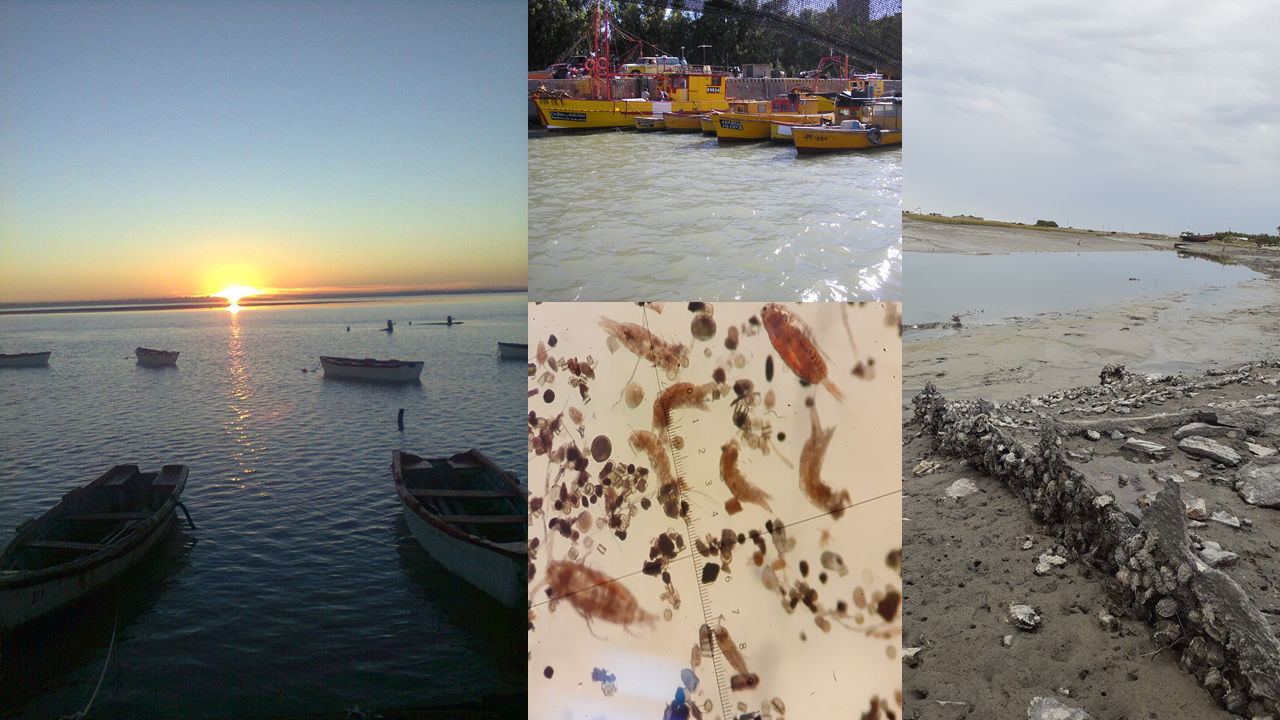
Los organismos del zooplancton, especialmente los copépodos, cumplen un rol fundamental como sustento trófico de los ecosistemas marinos y son considerados buenos indicadores de la calidad ambiental. En dicho contexto, el objetivo del presente trabajo fue determinar y analizar comparativamente la riqueza especifica (r) y diversidad de Shannon-Wiener (H´) de la comunidad del zooplancton y mortandad no-depredatoria de copépodos, en tres áreas con diferente grado de alteración antrópica durante el periodo invernal en 2019. Para ello, las áreas seleccionadas fueron Puerto Cuatreros-C, Puerto Ing. White-W y Puerto Rosales-R (100 m de la descarga cloacal de la ciudad de Punta Alta). Se tomaron muestras de zooplancton, que fueron teñidas y conservadas mediante la técnica de coloración intravital de rojo neutro; para su posterior análisis cuali-cuantitativo bajo lupa. La mortandad no-depredatoria fue evaluada a través de la incidencia de copépodos muertos (ICM, expresado en % en relación a la abundancia total de copépodos), la cual se determinó observando la coloración intravital. Nuestros resultados mostraron que la comunidad zooplanctónica estuvo dominada en forma alternada por los copépodos Acartia tonsa y Eurytemora americana. La mayor riqueza específica fue hallada en el sitio C (r=12) y la menor diversidad promedio (H´=0,93), junto con los menores valores de abundancia zooplanctónica se registraron en R (122,20 ± 148 ind m-3; Kruskal-Wallis p= 0,052). Las ICM promedio por especie fueron: 78,13 % para A. tonsa, 72,43 % para Euterpina acutifrons, 19,21 % para Paracalanus spp. y 39,78 % para E. americana, siendo el sitio R el que mostró los máximos valores de ICM. La menor diversidad y la mayor ICM, observados en este estudio estaría relacionadas con procesos de degradación ambiental, ligados principalmente a la descarga cloacal.
Referencias
Afraei-Bandpei, M. A., Rowshan-Tabari, M., El-SayedAbdel-Fatah M., Khodaparast, N.,& Nasrolahzadeh, H. (2017). Abundance and Biomass of the invasive copepod, Acartia tonsa Dana, 1849 around the fish cage culture in the southern Caspian Sea (Mazandaran-Kelarabad), Iran. Advances in Agricultural Science, 5(4), 1-12.
Arias, A. H., Vazquez-Botello, A., Tombesi, N., Ponce-Vélez, G., Freije, R.H., Marcovecchio, J. E. (2010). Presence, distribution, and origins of polycyclic aromatic hydrocarbons (PAHs) in sediments from Bahía Blanca Estuary, Argentina. Environmental Monitoring and Assessment, 60, 301–314.
Belmonte, G., Moscatello, M., Hajderi, E., Vaglio, I., & Denitto, F. (2018). Composition and Spatial Distribution of Mesozooplankton along Confinement and Anthropogenic-Impact Gradients in the Gulf of Vlore¨ (Albania). Journal of Coastal Research, 34(1),174-184.
Berasategui, A. A., M. S. Dutto, C. López-Abbate, V. Guinder, 2021. Ecology and biodiversity of the plankton in the BBE. In F. S. Pratolongo & D. Paula (eds), The Bahía Blanca estuary: ecology and biodiversity, (cap. 5, 83- 112). Springer Nature Switzerland AG., Switzerlandhttps://doi.org/10.1007/978-3-030-66486-25
Berasategui, A. A, López Abbate, M. C., D’Agostino, V. C., Presta, M. L., Uibrig, R., García, T. M., Nahuelhual, E., Chazarreta, C. J., Dutto, M. S., Garcia, M., Capitanio, F., & Hoffmeyer M. S. (2019). Mesozooplankton structure and seasonal dynamics in three coastal systems in Argentina: Bahía Blanca Estuary, Pirámide Bay and Ushuaia Bay. In M. Hoffmeyer, M. E. Sabatini, F. Brandini, D. Calliari, N. H. Santinelli (Eds), Plankton Ecology of Atlantic South America, (pp. 327-347). Springer.
Berasategui, A. A., Dutto, M. S., Chazarreta, J., & Hoffmeyer, M. S. (2013). Seasonal occurrence and hatching success of benthic eggs of calanoid copepods in the Bahía Blanca Estuary, Argentina. Marine Biology Research, 9(10), 1018-1028.
Berasategui, A. A., Hoffmeyer, M. S., Dutto, M. S., & Biancalana, F. (2012). Seasonal variation in the egg morphology of the copepod Eurytemora americana and its relationship to reproductive strategy in a temperate estuary in Argentina. ICES Journal of Marine Science, 69(3), 380-388.
Beşiktepe, S., Tang, K. W., Mantha, & G. (2015). Seasonal variations of abundance and live/dead compositions of copepods in Mersin Bay, northeastern Levantine Sea (eastern Mediterranean). Turkish Journal of Zoology, 39, 494-506.
Biancalana, F., Menéndez, M. C., Berasategui, A. A., Fernández Severini, M. D., & Hoffmeyer, M. S. (2011). Sewage pollution effects on mesozooplankton structure in a shallow temperate estuary. Environmental Monitoring and Assessment, 184(6), 3901-13. http://dx.doi.org/10.1007/s10661-011-2232-2
Bianchi, F., Acri, F., Bernardi Aubry, F., Berton, A., Boldrin, A., Camatti, E., Cassin, D., & Comaschi, A. (2003). Can plankton communities be considered as bio-indicators of water quality in the Lagoon of Venice? Marine Pollution Bulletin, 46(8), 964-971. https://doi.org/10.1016/S0025-326X(03)00111-5
Bickel, S. L., Malloy Hammond, J. D., & Tang, K. W. (2011). Boat-generated turbulence as a potential source of mortality among copepods. Journal of Experimental Marine Biology and Ecology, 401, 105-109.
Boltovskoy, D. (Ed). 1981. Atlas del zooplancton de Atlántico Sudoccidental y métodos de trabajo con el Zooplancton Marino. Publicación Especial del Instituto Nacional de Investigación y Desarrollo Pesquero (INIDEP). Mar del Plata, Argentina.
Chazarreta, J., Dutto, M. S., Berasategui, A. A., Paniagua, G. F., Fritz, L. J., Cuadrado, D. G., & Hoffmeyer, M. S. (2020). Zooplankton community modulated by spatial and tidal changes in the Bahía Blanca Estuary, Argentina. Regional Studies in Marine Science, 36 (2020)101277. https://doi.org/10.1016/j.rsma.2020.101277
Chazarreta, J., Hoffmeyer, M. S., Cuadrado, D. G., & Berasategui, A. A. (2015). Tidal effects on short-term mesozooplankton distribution in small channels of a temperate-turbid estuary, Southwestern Atlantic. Brazilian Journal of Oceanography, 63(2), 83–92. https://doi.org/10.1590/S1679-87592015076806302
Cifuentes, O., Escudero, D., Medus, S., Bohn, A. y Dosso, A. (2012). Estudio de la dinámica (espacial y temporal) de los efluentes líquidos industriales y urbanos en la zona del Polo Petroquímico y área portuaria de Bahía Blanca. En Puliefito (Eds). Contaminación atmosférica e hídrica en Argentina, (pp. 539–545). Universidad Tecnológica Nacional.
Di Capua, I., & Mazzocchi, M. G. (2017). Non‑predatory mortality in Mediterranean coastal copepods. Biología Marina, 164 (2017), 198. https://doi.org/10.1007/s00227-017-3212-z
Du, P., Liao, J. D., Jiang, Z. B., Wang, K., Zeng, J. N., Shou, L., Xu, X.Q., Xu, X. D., Liu, J. J., Huang, W., & Zhang, D. M. (2018). Responses of mesozooplankton communities to different anthropogenic activities in a subtropical semi-enclosed bay. Journal of the Marine Biological Association of the United Kingdom, 98(4), 673-686.
Dzierzbicka-Głowacka, L., Musialik-Koszarowska, M., Kalarus, M., Lemieszek, A., Pra˛tnicka, P., Janecki, M., & Z˙mijewska, M. I. (2019). The Interannual Changes in the Secondary Production and Mortality Rate of Main Copepod Species in the Gulf of Gdansk (The Southern Baltic Sea). Applied Sciences, 9- 2039. https://doi.org/10.3390/app9102039
Elliott, D. T., & Tang, K. W. (2009). Simple staining method for differentiating live and dead marine zooplankton in field samples. Limnology and Oceanography: Methods, 7, 585-594.
Elliott, D. T., Harris, C. K., & Tang, K. W. (2010). Dead in the water: The fate of copepod carcasses in the York River estuary, Virginia. Limnología y Oceanografía, 55, 1821-1834. https://doi.org/10.4319/lo.2010.55.5.1821
Elliott, D. T., & Tang, K. W. (2011). Influence of carcass abundance on estimates of mortality and assessment of population dynamics in Acartia tonsa. Marine Ecology Progress Series, 427, 1-12.
Escudero, D., Medus, S., Cifuentes, O. y Devoto, B. (2014). Propuesta metodológica para la identificación de fuentes de plomo en cuencas colectoras urbanas. Revista digital del Grupo de Estudios sobre Geografía y Análisis Espacial con Sistemas de Información Geográfica, 6(2014-II), 64-76.
Fernández Severini, M. D., Carbone, M. E., Villagran, D. M., & Marcovecchio, J. E. (2018). Toxic metals in a highly urbanized industry-impacted estuary (Bahia Blanca Estuary, Argentina): spatio-temporal analysis based on GIS. Environmental Earth Sciences, 77, 393(2018). https://doi.org/10.1007/s12665-018-7565-5
Fernández-Severini, M. D., Villagran, D. M., Biancalana, F., Berasategui, A. A., Spetter, C. V., Tartara, M. N., Menéndez, M. C., Guinder, V. A., & Marcovecchio, J. E. (2017). Heavy Metal concentrations found in seston and microplankton from an impacted temperate shallow estuary along the southwestern Atlantic Ocean. Journal of Coastal Research, 33(5), 1196–1209. https://doi.org/10.2112/JCOASTRES-D-16-00151
Figueroa, N. J., Figueroa, D. F., & Hicks, D. (2020). Phylogeography of Acartia tonsa Dana, 1849 (Calanoida: Copepoda) and phylogenetic reconstruction of the genus Acartia Dana, 1846. Marine Biodiversity, 50-23. https://doi.org/10.1007/s12526-020-01043-1
Freije R. H., Spetter, C. V., Marcovecchio, J. E., Popovich, C. A., Botté, S. E., Negrín V., & Arias, A. (2008). Chemistry and nutrients of the Bahía Blanca Estuary. In R. Neves, J. W. Baretta & M. Mateus (eds), Perspectives on integrated zone management in South America, (pp. 241- 254). IST Press.
Gao, Y., Yang, Q., Li, H., Wang, W., & Zhan, A. (2019). Anthropogenic pollutant-driven geographical distribution of mesozooplankton communities in estuarine areas of the Bohai Sea, China. Nature Scientific Reports, 9-9668. https://doi.org/10.1038/s41598-019-46047-5
Grice, G. D. (1970). The Developmental stages of Eurytemora americana Williams, 1906, and Eurytemora herdmani Thompson and Scott, 1897 (Copepoda, Calanoida). Crustaceana, 20, 145-158.
Guinder, V. A., Popovich, C. A., Molinero, J. C., & Perillo, G. (2010). Long term changes in phytoplankton phenology and community structure in the Bahía Blanca Estuary, Argentina. Marine Biology, 157(12), 2703-16.
Guinder, V. A., Popovich, C. A., & Perillo, G. M. E. (2009). Particulate suspended matter concentrations in the Bahía Blanca estuary, Argentina: implication for the development of phytoplankton blooms. Estuarine, Coastal and Shelf Science, 85, 157-165. http://dx.doi.org/10.1016/j.ecss.2009.05.022
Heron, G. A. (1964). Seven species of Eurytemora (Copepoda) from Northweatern North America. Crustaceana, 7 (3),199-211.
Hirst, A. G., & Kiørboe, T. (2002). Mortality of marine planktonic copepods: global rates and patterns. Marine Ecology Progress Series, 230, 195-209.
Hoffmeyer, M. S. (2004). Decadal change in zooplankton seasonal succession in the Bahía Blanca Estuary, Argentina, following introduction of two zooplankton species. Journal of Plankton Research, 26(2), 181-89. https://doi.org/10.1093/plankt/fbh023
Hoffmeyer, M. S., Biancalana, F., & Berasategui, A. A. (2005). Impact of a power plant cooling system on copepod and meroplankton survival (Bahía Blanca, Argentina). Iheringia Série Zoologia, 95(3), 311-318. https://doi.org/10.1590/S0073-47212005000300011
Hoffmeyer, M. S., & Figueroa, M. P. (1997). Integumental structures in the oral field of Eurytemora affinis and Acartia tonsa (Copepoda, Calanoida) in relation to their trophic habits. Crustaceana, 70(3), 257-271.
La Colla, N. S., Negrin, V. L., Marcovecchio, J. E., Botté, S. E. (2015). Dissolved and particulate metals dynamics in a human impacted estuary from the SW Atlantic. Estuarine Coastal and Shelf Science, 166, 45-55. https://doi.org/10.1016/j.ecss.2015.05.009
Landry, M. R. (1983). The development of marine calanoid copepods with comment on the isochronal rule. Limnology and Oceanography 28(4), 614-624. https://doi.org/10.4319/lo.1983.28.4.0614
Limbozzi, F., & Leitào, T. E. (2008). Characterization of Bahía Blanca main existing pressures and their effects on the state indicators for surface and groundwater quality. In R. Neves, J. Baretta & M. Mateus (Eds.), Perspectives on integrated coastal zone management in South America, (pp.315–331). Lisboa. IST PRESS
Lobry, J., David, V., Pasquaud, S., Lepage, M., Sautour, B., & Rochard, E. (2008). Diversity and stability of an estuarine trophic network. Marine Ecology Progress Series, 358, 13-25. https://doi.org/10.3354/meps07294
Lopez-Cazorla, A., Pettigrosso, R. E., Tejera, L., & Camina, R. (2011). Diet and food selection by Ramnogaster arcuata (Osteichthyes, Clupeidae). Journal of Fish Biology, 78 (7), 2052-2066. http://hdl.handle.net/11336/66935
Lynch, M. (1983). Estimation of size-specific mortality rates in zooplankton populations by periodic sampling. Limnology and Oceanography, 28(3), 533-545. https://doi.org/10.4319/lo.1983.28.3.0533
Marcovecchio, J. E., Botté, S., Delucchi, F., Arias, A., Fernández Severini, M. D., De Marco, S., Tombesi, N., Andrade, S., Ferrer, L., & Freije, H. (2008). Pollution processes in Bahía Blanca estuarine environment. In: Neves, R.I.; Baretta, J., and Mateus, M. (Eds.), Perspectives on Integrated Coastal Zone Management in South America, (pp. 303–316). Lisbon, Portugal: IST.
Marcus, N. (2004). An Overview of the Impacts of Eutrophication and Chemical Pollutants on Copepods of the Coastal Zone. Zoological Studies, 43(2), 211-217.
Martínez, M., Espinosa, N., & Calliari, D. (2014). Incidence of dead copepods and factors associated with non-predatory mortality in the Río de la Plata estuary. Journal of Plankton Research, 36(1), 265-270. https://doi.org/10.1093/plankt/fbt106
Mauchline, J. (1998). The Biology of Calanoid Copepods. Elsevier Academic Press, San Diego California USA. https://search.ebscohost.com/login.aspx?direct=true&scope=sitdb=nlebk&db=nlabk&AN=241476
Mieszkowska N, Sugden H, Firth, L. B., & Hawkins, S. J. (2014). The role of sustained observations in tracking impacts of environmental change on marine biodiversity and ecosystems. Philosophical Transactions of the Royal Society A, 372(2025), 1-13. https://doi.org/10.1098/rsta.2013.0339
Oliva, A. L., Quintas, P. Y., La Colla, N. S., Arias, A. H., & Marcovecchio, J. E. (2015). Distribution, Sources, and Potential Ecotoxicological Risk of Polycyclic Aromatic Hydrocarbons in Surface Sediments from Bahía Blanca Estuary, Argentina. Archives of Environmental Contamination and Toxicology, 69, 163-172. https://doi.org/10.1007/s00244-015-0169-0
Popovich, C. A. y Guinder, V. A. (2013) El rol del fitoplancton en los procesos biogeoquímicos en estuarios. En H. Freije y J. E. Marcovecchio (Eds), Procesos físico químicos en estuarios (pp. 172-196). Editorial EdUTecNe, Bahía Blanca, Argentina. http://www.edutecne.utn.edu.ar/proc_quim_estuarios/proc_quim_estuarios.pdf
Quintas, P. Y., Alvarez, M. B., Arias, A. H., Garrido, M., & Marcovecchio, J. E. (2019). Spatiotemporal distribution of organotin compounds in the coastal water of the Bahía Blanca estuary (Argentina). Environmental Science and Pollution Research, 26, 7601–7613. https://doi.org/10.1007/s11356-019-04181-7
Sabatini, M. E. (1990). The develomental stages (copepodids I to VI) of Acartia tonsa Dana, 1849 (Copepoda, Calanoida). Crustaceana, 59, 53-61. https://doi.org/10.1163/156854090X00282
Statsoft Inc. (2005). Statistica Base [programa informático]. http://www.statsoft.com
Tang, K. W., Freund, C. S., & Schweitzer, C. L. (2006). Occurrence of copepod carcasses in the lower Chesapeake Bay and their decomposition by ambient microbes. Estuarine, Coastal and Shelf Science, 68(3-4), 499-508. https://doi.org/10.1016/j.ecss.2006.02.021
Villagran, D. M., Fernández Severini, M. D., Biancalana F., Spetter, C. V., Fernández, E. M., & Marcovecchio, J. E. (2019). Bioaccumulation of heavy metals in mesozooplankton from a human-impacted south western Atlantic estuary (Argentina). Journal of Marine Research, 77, 217–241.
Publicado
Número
Sección
Licencia
La Editorial de la Universidad Nacional de La Pampa (EdUNLPam) exigirá a los/as autores/as la firma del siguiente documento:
La EdUNLPam lleva a cabo la publicación del artículo: (Título del Artículo) en SEMIÁRIDA Rev.Fac.Agron UNLPam ISSN 2362-4337 (impresa) ISSN 2408-4077 (en línea), del cual el/los abajo firmantes son autores de una o más partes. En el mismo acto, el/los autores entregan exclusivamente a la EdUNLPam todos sus derechos protegidos por las leyes de propiedad intelectual que rigen en la Argentina para reproducir, publicar, editar, fijar, comunicar y transmitir públicamente en cualquier formato o medio impreso o electrónico, inclusive internet, el artículo enviado a publicación e incluirlo en índices o bases de datos nacionales e internacionales. A cambio, la EdUNLPam entrega a los autores la autorización para la publicación o reimpresión con ines académicos y educativos en cualquier libro o medio de divulgación, con la sola obligación de citar el artículo original publicado en la EdUNLPam. Cada autor acuerda en que el material provisto a la EdUNLPam es un trabajo original, que no ha sido impreso o publicado en cualquier otro medio con anterioridad y que no vulnera derechos de terceros. El Primer autor tendrá la posibilidad de leer y corregir el artículo ya editado como “prueba de galera”, pero si el autor no devolviera esas correcciones de la prueba de galera dentro del tiempo especificado, el proceso de producción y publicación podrá proseguir sin la aprobación del autor. El/los autor/es no recibirán compensación monetaria de la EdUNLPam por el uso del material contenido en este artículo y asumen la responsabilidad de las opiniones vertidas en él.
Cómo citar









.png)


