Forage quality of goat intake, in the South Central Plateau of Mendoza (Argentina)
DOI:
https://doi.org/10.19137/cienvet202325202Keywords:
Goat production, Forage quality, Intake by simulationAbstract
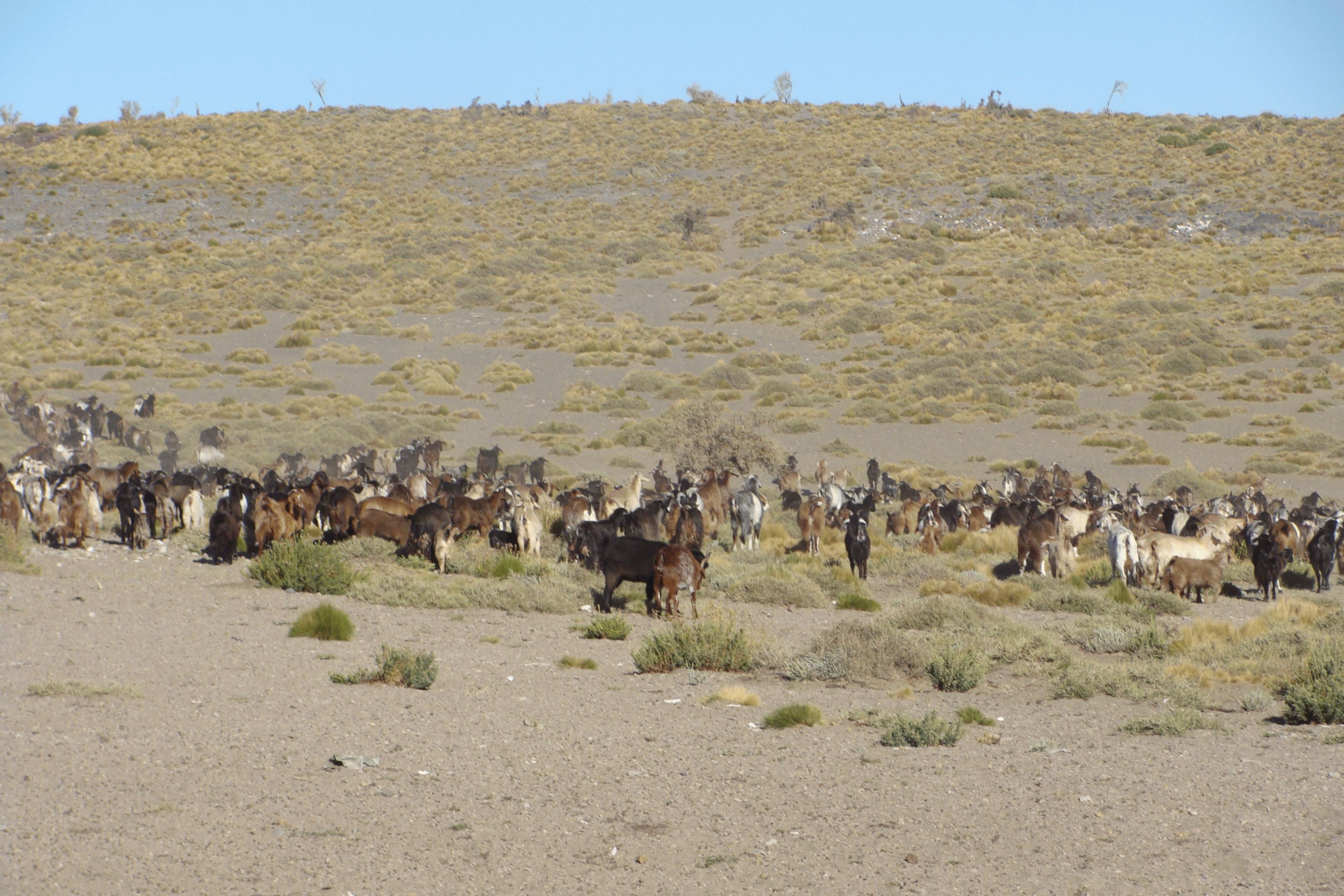
The objective of this study was to determine the forage quality of goat intake in a natural pasture in the Meseta Central del Sur de Mendoza (Argentina). The test was carried out by simulating the goat intake with manual harvesting of the plant species that make up the intake of Creole goats under direct grazing, including the species that were present above 1% in each of the phenological moments. Six samples were simulated for each vegetative period and the percentage of Crude Protein, Neutral Detergent Fiber, Acid Detergent Fiber, Digestibility of Dry Mater (DMS) and Metabolic Energy (ME) were evaluated for each sample. The difference between the means according to phenological moment was made by ANAVA and Tukey's test, for the variables evaluated. The results obtained showed that at the time of regrowth is when the highest level of crude Protein (20.51±1.14%) and Expected Digestibility of Dry Matter (72.13±1.68%) shows the goat intake, with a significant statistical difference (p<0.05), in relation to the other phenological moments considered. Despite this, forage quality levels both in pre-flowering (13.92±0.83% and DEMS 67.66±2.27%) and in vegetative rest (P.B. 9.93±0.62% and DEMS 61.33±1.72%) can be considered good, since they are enough to cover the needs of the Creole goats used in this trial. It can be concluded by saying that the Criolla goat in direct grazing of the vegetation in the South Central Plateau of Mendoza maintains a good quality forage intake throughout the year based on the selection of the plant species it consumes.
Downloads
Published
Issue
Section
License
Al momento de enviar sus contribuciones, los colaboradores deberán declarar , de manera fehaciente, que poseen el permiso del archivo o repositorio donde se obtuvieron los documentos que se anexan al trabajo, cualquiera sea su formato (manuscritos inéditos, imágenes, archivos audiovisuales, etc.), permiso que los autoriza a publicarlos y reproducirlos, liberando a la revista y sus editores de toda responsabilidad o reclamo de terceros , los autores deben adherir a la licencia Creative Commons denominada “Atribución - No Comercial CC BY-NC-SA”, mediante la cual el autor permite copiar, reproducir, distribuir, comunicar públicamente la obra y generar obras derivadas, siempre y cuando se cite y reconozca al autor original. No se permite, sin embargo, utilizar la obra con fines comerciales.
How to Cite





.jpg)