Study of the biological cycle of the fiber of creole goats that carry cashmere autochthonous from Northern Patagonia, Argentina
DOI:
https://doi.org/10.19137/cienvet202325204Keywords:
Goats, Animal fibers, Biology of fiber growth, SheedingAbstract
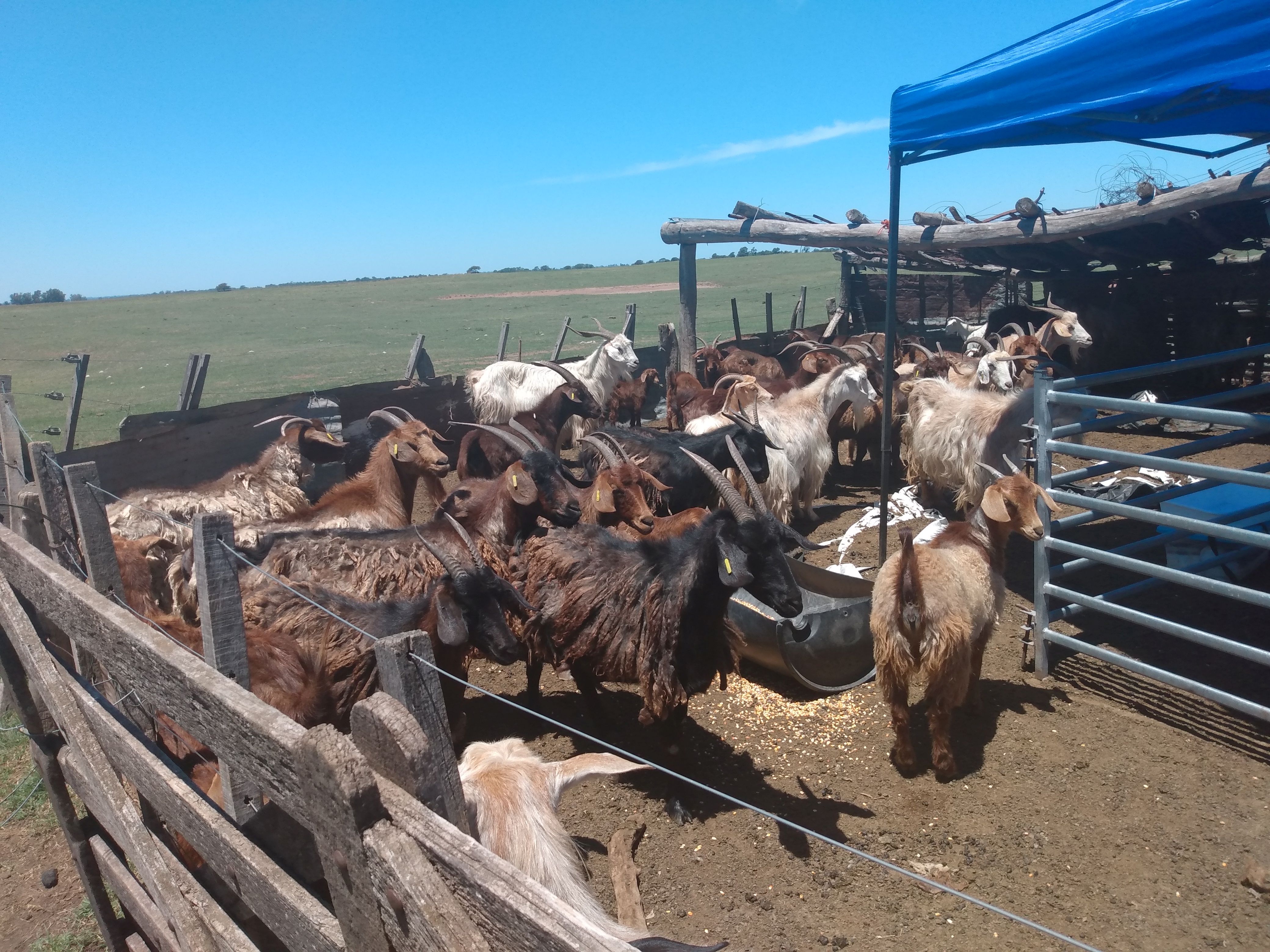
Cashmere is one of the finest and softest fibers for the textile industry. Its obtaining by combing is cruel, with up to three repetitions, not according to animal welfare. Shearing implies a risk of mortality due to the high sensitivity of goats to low temperatures, because it must be carried out before the spring moult. It is necessary to explore methods of synchronized, uniform harvest and with animal welfare. Investigations of the cycle of hair follicles of goats in North Patagonia, Argentina are required. The objective was to contribute to the study of the biology of growth and fiber shedding of cashmere-bearing creole goats from Northern Patagonia and to determine the optimal moments to implement harvesting methods. Adult creole goats were used at 35° south latitude, in a semi-extensive system in La Pampa. Individual fiber samples were taken periodically by combing and trichotomy in the neck, back, flank and leg. At the population level, the shedding of fine fiber when combed is significant (p < 0.05) in June-September, maximum in August, coinciding with the highest amounts of fine fiber and wick length, while the average diameter does not vary significantly during the year (p < 0.05). The goats presented visible hair removal from September, completing it in October-January, most of them beginning in the neck and back region. Given proposals such as Australia's shearing in July, this work infers that cashmere harvest without significant losses can be postponed, depending on the climatic variation, until the month of August.
Downloads
Published
Issue
Section
License
Al momento de enviar sus contribuciones, los colaboradores deberán declarar , de manera fehaciente, que poseen el permiso del archivo o repositorio donde se obtuvieron los documentos que se anexan al trabajo, cualquiera sea su formato (manuscritos inéditos, imágenes, archivos audiovisuales, etc.), permiso que los autoriza a publicarlos y reproducirlos, liberando a la revista y sus editores de toda responsabilidad o reclamo de terceros , los autores deben adherir a la licencia Creative Commons denominada “Atribución - No Comercial CC BY-NC-SA”, mediante la cual el autor permite copiar, reproducir, distribuir, comunicar públicamente la obra y generar obras derivadas, siempre y cuando se cite y reconozca al autor original. No se permite, sin embargo, utilizar la obra con fines comerciales.
How to Cite





.jpg)