
Presence of Montia fontana L. in La Pampa province, Argentina
DOI:
https://doi.org/10.19137/semiarida.2026(2).49-53Keywords:
Montiaceae, vascular plants biodiversity, wetlands floraAbstract
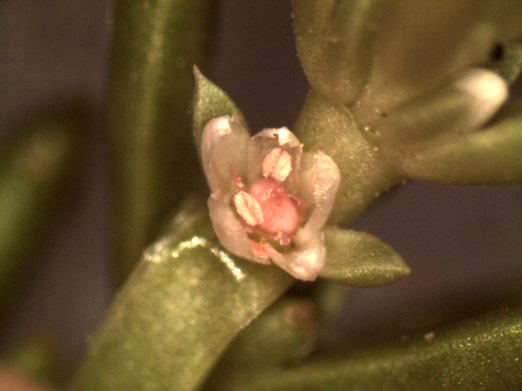
Montia fontana L. (Montiaceae) is a cosmopolitan species associated mainly with wet habitats, whose broad morphological variability has led to different taxonomic interpretations over time. In Argentina, its known distribution included the Malvinas Islands and the provinces of Jujuy, San Juan, Neuquén, Río Negro, Chubut, Santa Cruz, and Tierra del Fuego. The aim of this study was to document the first record of M. fontana for La Pampa Province, provide a description based on local material, and update its geographic distribution in Argentina. Specimens were collected at El Carancho Lagoon (Utracán Department, La Pampa), processed using standard botanical techniques, and identified through specialized literature and comparisons with material from digital herbaria. A population of M. fontana was recorded growing in seasonally flooded areas along the lagoon shoreline. The specimens exhibited diagnostic characters consistent with the species, although some traits differed from previous descriptions reported for the Argentine flora, a finding that agrees with the high morphological variability previously documented for this taxon. This record extends the known distribution range of the species in Argentina and represents the second record of a Montiaceae species for La Pampa Province. Furthermore, the occurrence of the species in a wetland associated with plant communities tolerant of moderate salinity suggests a broader ecological amplitude than generally attributed to the species. This new record contributes to the knowledge of the flora of La Pampa and highlights the importance of continued botanical exploration of regional wetlands to improve our understanding of the distribution of uncommon plant species in central Argentina.
References
Añón, D. (1984). Portulacaceae. En M. N. Correa (Ed.). Flora Patagónica (pp. 168-194), Colección Científica INTA 8 (4a).
Añón, D. y Peralta, I. E. (1994). Portulacaceae. En R. Kiesling (Ed.). Flora de San Juan 1 (pp. 144-171).
Calderón, S. y A. Prina. 2016. Flora vascular del área de cerro Negro – departamento Chical-Co, La Pampa, Argentina. Chloris Chilensis 19 (1). http://www.chlorischile.cl
Díaz Fernández, P. M., Ramos Miras, J. J., San José Wery, A. M. y López Almansa, J. C. (2009). Caracterización ecológica del hábitat de la Boruja (Montia fontana L.) en la provincia de Ávila. En: 5° Congreso Forestal Español. Montes y sociedad. Saber qué hacer. Sociedad Española de Ciencias Forestales. Ávila.
Echaniz, S., Vignatti A., de Paggi, S. J. y Cabrera, G. (2010). El modelo de estados alternativos de lagos someros en La Pampa: comparación de Bajo de Giuliani y El Carancho. En: Actas Tercer Congreso Pampeano del Agua (Dalmaso M. G., Camiletti, C. M. y Hernández R. Compiladores). Santa Rosa. pp 45-53. https://recursoshidricos.lapampa.gob.ar/images/Archivos/Publicaciones/Libro_III_Congreso_del_Agua_.pdf
Hershkovitz, M. A. (2019). Systematics, evolution, and phylogeography of Montiaceae (Portulacineae). Phytoneuron, 27, 1–77. https://www.phytoneuron.net/2019Phytoneuron/27PhytoN-Montiaceae.pdf
Holmgren, P. K., Holmgren N. H. y Barnett L. C., eds. (1990) Index Herbariorum. Part I. The Herbaria of the World. 8 th. Edition. New York Botanical Garden. NY. Actualizado continuamente en https://sweetgum.nybg.org/science/ih/
Katinas, L. (2001). El herbario. Significado, valor y uso. PROBIOTA. Serie técnica y didáctica 1. 11 pp. https://sedici.unlp.edu.ar/handle/10915/15871
Lourteig, A. (1991). El género Montia (Portulacaceae) en el hemisferio austral. Revista de la Academia Colombiana de Ciencias Exactas, 18(68), 41-48. https://raccefyn.co/index.php/raccefyn/article/view/3948
McNeill, J. (1975). A generic revision of Portulacaceae tribe Montieae using techniques of numerical taxonomy. Canadian Journal of Botany, 53, 789-809. https://cdnsciencepub.com/doi/10.1139/b75-096
Moore, D. M. (1963). The subespecies of Montia fontana L. Botaniska Noticer, 116(1), 16-30.
Nyffeler, R., & Eggli, U. (2010). Disintegrating Portulacaceae: a new familial classification of the suborder Portulacineae (Caryophyllales) based on molecular and morphological data. Taxon, 59(1), 227-240. https://www.zora.uzh.ch/server/api/core/bitstreams/f28c6426-33b0-442b-bf88-7f85d22d1883/content
Nilsson, Ö. (1967). Studies in Montia L. and Claytonia L. and allied genera: III Pollen Morphology. Grana Palynologica, 7(2-3), 280-363. https://www.tandfonline.com/doi/abs/10.1080/00173136709430042
O’Quinn, R., & Hufford, L. (2010). Molecular systematics of Montieae (Portulacaceae): implications for taxonomy, biogeography and ecology. Systematic Botany, 30(2), 314-331. https://www.jstor.org/stable/25064064
Peralta, I. y Molina P. M. (2021). Montiaceae. En: F. O. Zuloaga, M. J. Belgrano & C. A. Zanotti (Eds.), Flora Argentina 19(2), 312-349.
Royal Botanic Gardens Kew. Plants of the World Online. Recuperado el 18-VI-2026 de https://powo.science.kew.org/
Swanson, J. (1966). A synopsis of the relationship in Montioideae (Portulacaceae). Brittonia, 18, 229-241. https://www.jstor.org/stable/2805361
Tardío, J., Molina, M., Aceituno Mata, L., Pardo de Santayana, M., Morales, R., Fernández Ruiz, V., Morales, P., García, P., Cámara, M., & Sánchez Mata, M. C. (2011). Montia fontana L. (Portulacaceae), an interesting wild vegetable traditionally consumed in the Iberian Peninsula. Genetic Resources and Crop Evolution, 58, 1105-1118. https://link.springer.com/article/10.1007/s10722-011-9749-7
Vignatti, A., Echaniz, S., y Martín, M. C. (2007). El zooplancton de tres lagos someros de diferente salinidad y estado trófico en la región semiárida pampeana (Argentina). Gayana, 71(1), 34-48.
Walters, S. M. (1953). Montia fontana L. Watsonia 3, 1-6. https://archive.bsbi.org.uk/watsonia_3.html
Werth, E. (1911). Die vegetation der Subantarktischen Inseln Kerguelen, Possession und Heard Eiland. En E. Drygalski (Ed.), Deutsche Südpolar Expedition 1901-1903. 8: Botanik, (pp. 231-271). G. Reimer. Berlin. https://www.semanticscholar.org/paper/Die-Vegetation-der-Subantarktischen-Inseln-und-II.-Drygalski-Werth/4b7401a0bca9dce3a2e7d9b736cf59536a349f6b
Downloads
Published
Issue
Section
License
La Editorial de la Universidad Nacional de La Pampa (EdUNLPam) exigirá a los/as autores/as la firma del siguiente documento:
La EdUNLPam lleva a cabo la publicación del artículo: (Título del Artículo) en SEMIÁRIDA Rev.Fac.Agron UNLPam ISSN 2362-4337 (impresa) ISSN 2408-4077 (en línea), del cual el/los abajo firmantes son autores de una o más partes. En el mismo acto, el/los autores entregan exclusivamente a la EdUNLPam todos sus derechos protegidos por las leyes de propiedad intelectual que rigen en la Argentina para reproducir, publicar, editar, fijar, comunicar y transmitir públicamente en cualquier formato o medio impreso o electrónico, inclusive internet, el artículo enviado a publicación e incluirlo en índices o bases de datos nacionales e internacionales. A cambio, la EdUNLPam entrega a los autores la autorización para la publicación o reimpresión con ines académicos y educativos en cualquier libro o medio de divulgación, con la sola obligación de citar el artículo original publicado en la EdUNLPam. Cada autor acuerda en que el material provisto a la EdUNLPam es un trabajo original, que no ha sido impreso o publicado en cualquier otro medio con anterioridad y que no vulnera derechos de terceros. El Primer autor tendrá la posibilidad de leer y corregir el artículo ya editado como “prueba de galera”, pero si el autor no devolviera esas correcciones de la prueba de galera dentro del tiempo especificado, el proceso de producción y publicación podrá proseguir sin la aprobación del autor. El/los autor/es no recibirán compensación monetaria de la EdUNLPam por el uso del material contenido en este artículo y asumen la responsabilidad de las opiniones vertidas en él.
How to Cite









.png)


